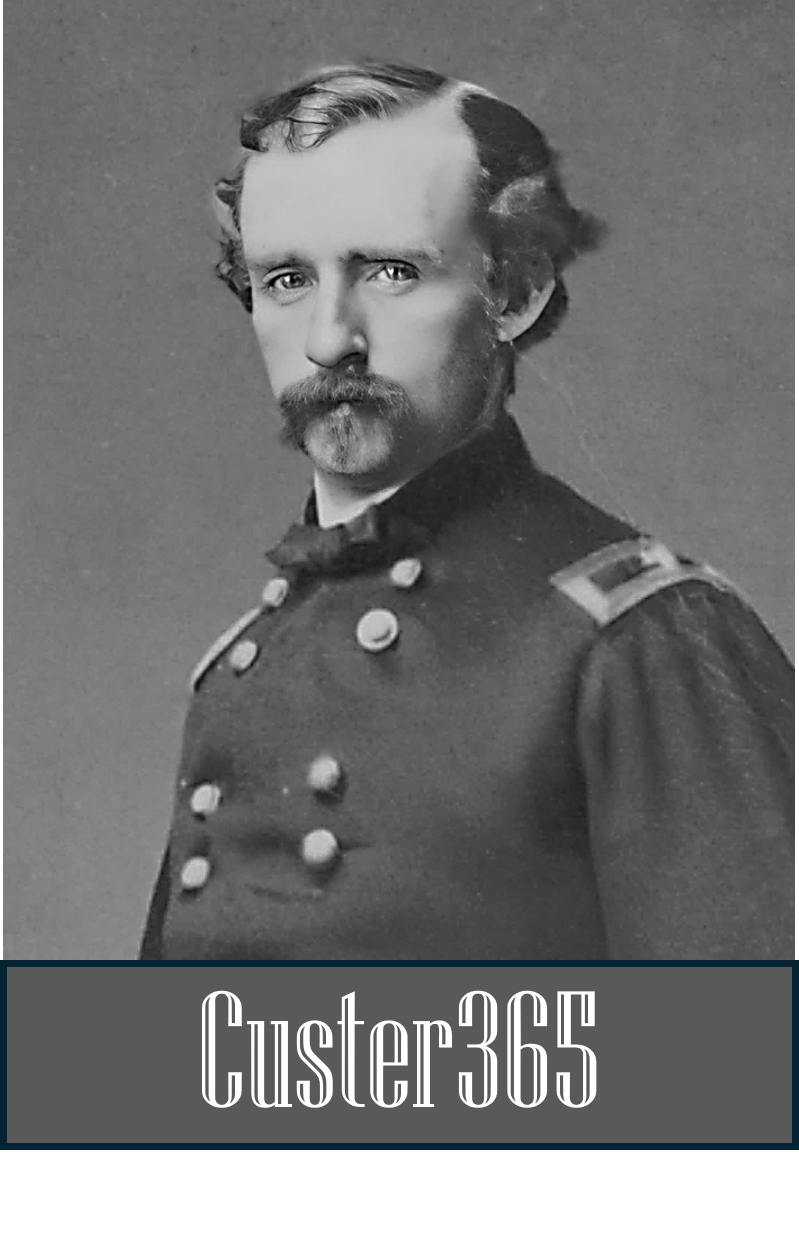

DEC 22: Custer Files Washita Action Report
On Dec. 22, 1868, Lt. Col. George A. Custer files his action report of the Nov. 27 attack on Black Kettle’s village of Cheyenne at the Washita River in present-day Oklahoma.
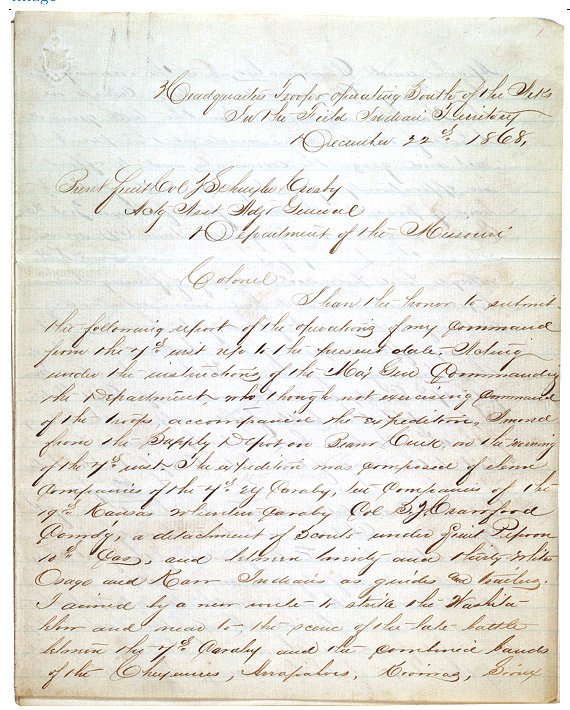
Page 1 of George A. Custer’s Action Report on the Battle of Washita (1868.) (Credit: The Gilder Lehrman Institute of American HIstory)
In it, Custer recounted discovering the bodies of Major Joel Elliott and 17 soldiers killed approximately two miles from the Washita battle site. On Nov. 27, Elliott, without receiving authorization from Custer, rode off with the men in pursuit of hostile Cheyennes fleeing the battle. They never returned and Custer exited the area without looking for them. He even listed all 18 men as deceased on an initial report.
On the morning of Dec. 11, Custer and a party of men under the command of Captain George Yates searched for the missing soldiers. Custer wrote:
“After marching a distance of two miles in the direction in which Maj Elliott and his little party were last seen we suddenly, came upon the stark, stiff, naked and horribly mutilated bodies of our dead Comrades. No words were needed to tell how desperate the struggle which ensued before they were finally overpowered.”
Custer also offered new information about the number of Cheyenne killed during the battle of the 27th. “A thorough examination of the immediate battle ground failed to discover anything worthy of special report,” Custer wrote, “except that Indian bodies were found which had (inserted: not) previously been reported in my first dispatch, and which went to prove what we are all aware of now, that the enemy’s loss in killed warriors far exceeded the numbers (103) one hundred and three first reported by me.”
Custer reportedly captured 53 Cheyenne women and children at Washita. Exact figures for the number of women and children killed during the battle vary, with estimates ranging from Cheyenne accounts of 12 women and children, to later claims of 75 women and children killed.
(NOTE: A PDF with content from the actual report is available through The Gilder Lehrman Institute of American History (www.gilderlehrman.org.))