
NOV 14: Cavalry Expanded in 1866
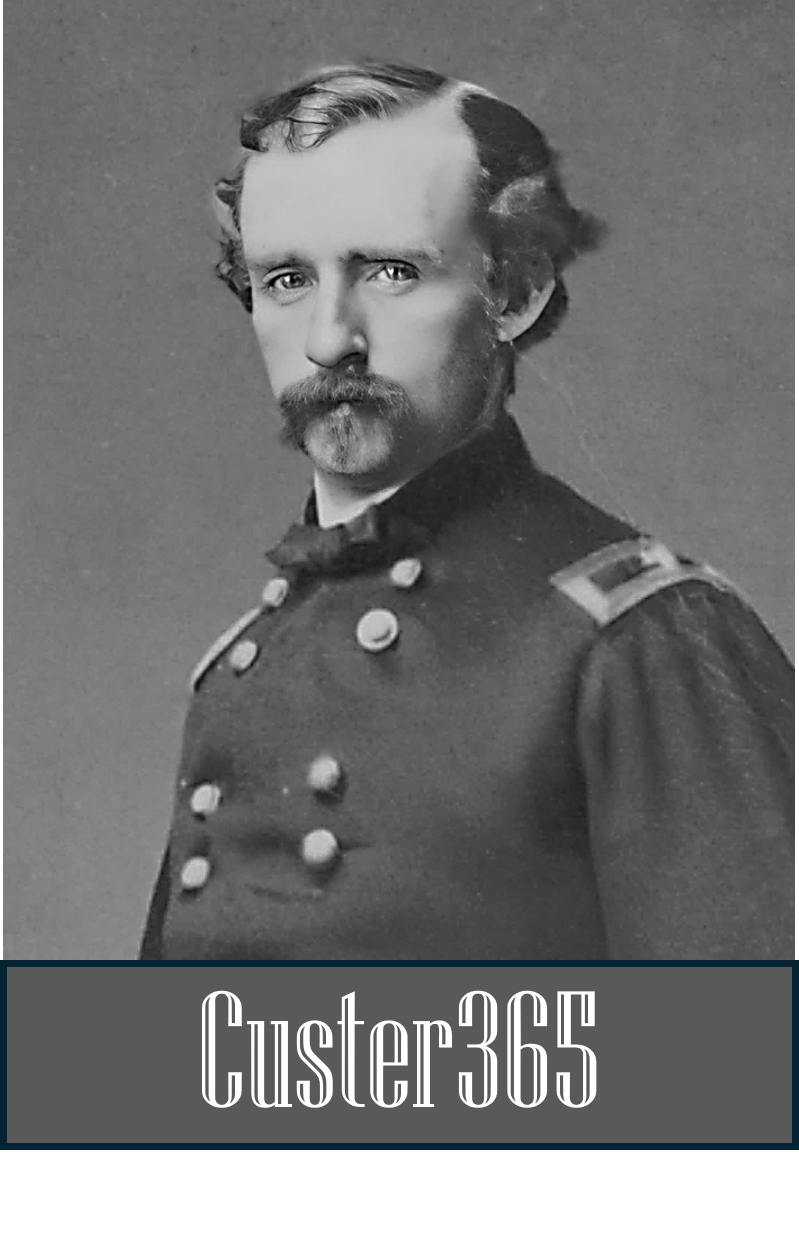
George A. Custer served with the cavalry throughout his career in the U.S. Army. He started with the 2nd Cavalry, fighting in the First Battle of Bull Run (July 1861) and the Peninsula Campaign (March-July 1862), before joining the 5th Cavalry for the Siege of Yorktown (April-May 1862.) He was eventually promoted to command the Michigan Cavalry Brigade, which was part of the Volunteer Army and not what is referred to as the “Regular Army”.
On July 28, 1866, Congress authorized four additional cavalry regiments to the six already in existence, according to author William H. Boudreau of the 1st Cavalry Division Association (www.1cda.org.) Thus, Custer’s famous 7th Cavalry was born.
Cavalry companies accounted for 20 percent of the total number of company sized organizations in the Regular Army. The Army’s authorized strength of approximately 57,000 officers and men was then more than double what it had been at the close of the Civil War. It was the first time in the nation’s history that the Regular Army had been increased substantially immediately after a war.
There was a need to increase manpower force levels, so recruiting new men became a priority. Emphasis was placed on securing Veteran Volunteers before they left the service. The officers were selected from both Volunteers and Regulars; each candidate was required to have had at least two years of honorable service in the Civil War.
The new cavalry regiments, numbered 7th, 8th, 9th, and 10th, were organized under the same tables as the six already in existence. A regiment consisted of 12 companies formed into three squadrons of four companies each. Besides the commanding officer, who was a colonel, the regimental staff included seven officers, six enlisted men, a surgeon, and two assistant surgeons. Each company was authorized four officers, 15 noncommissioned officers, and 72 privates. A civilian veterinarian accompanied the regiment, although he was not included in the table of organization.
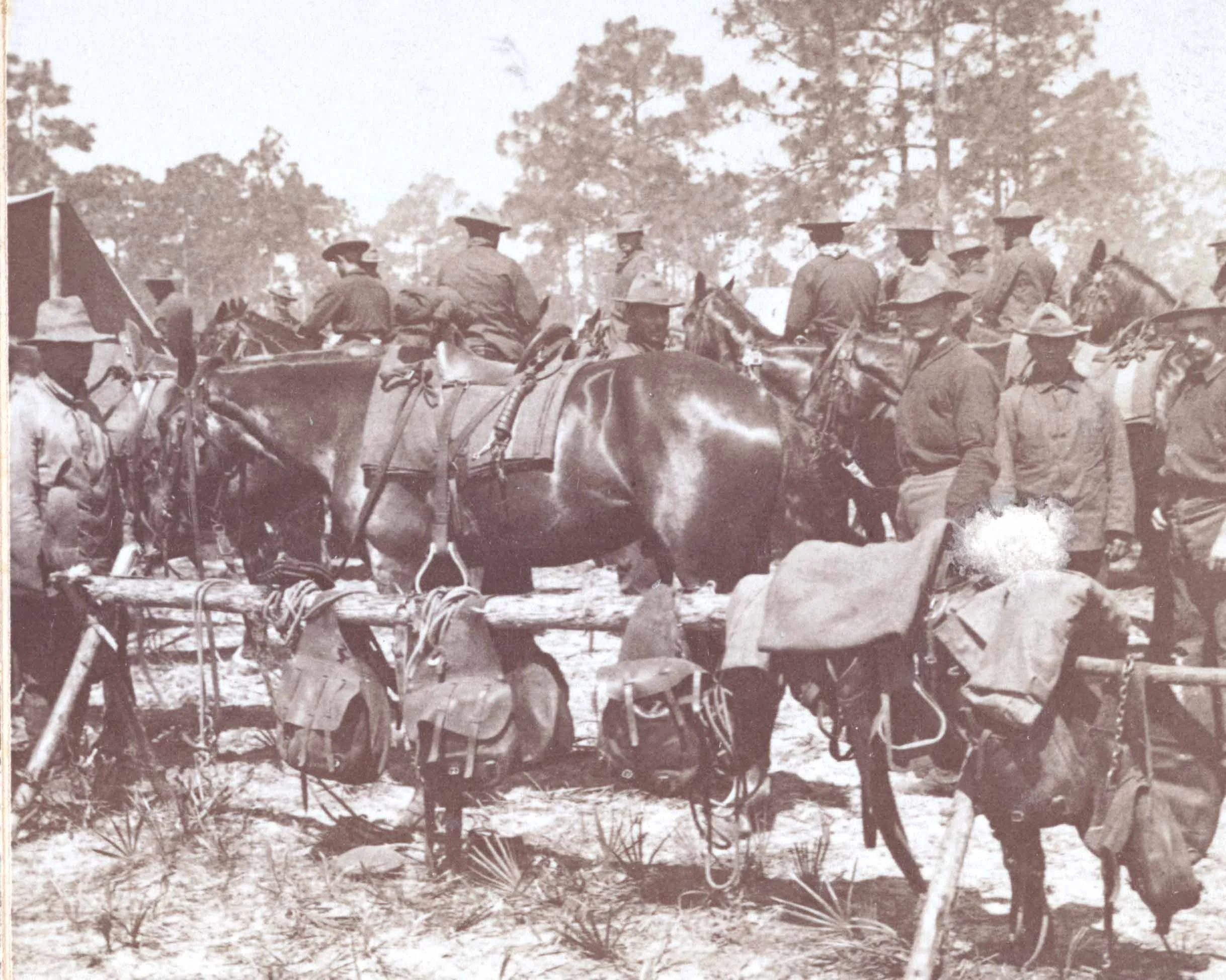
Scene from a cavalry camp in Tampa, Florida in 1898. (Credit: Library of Congress)