
OCT 15: Art Imitates Life
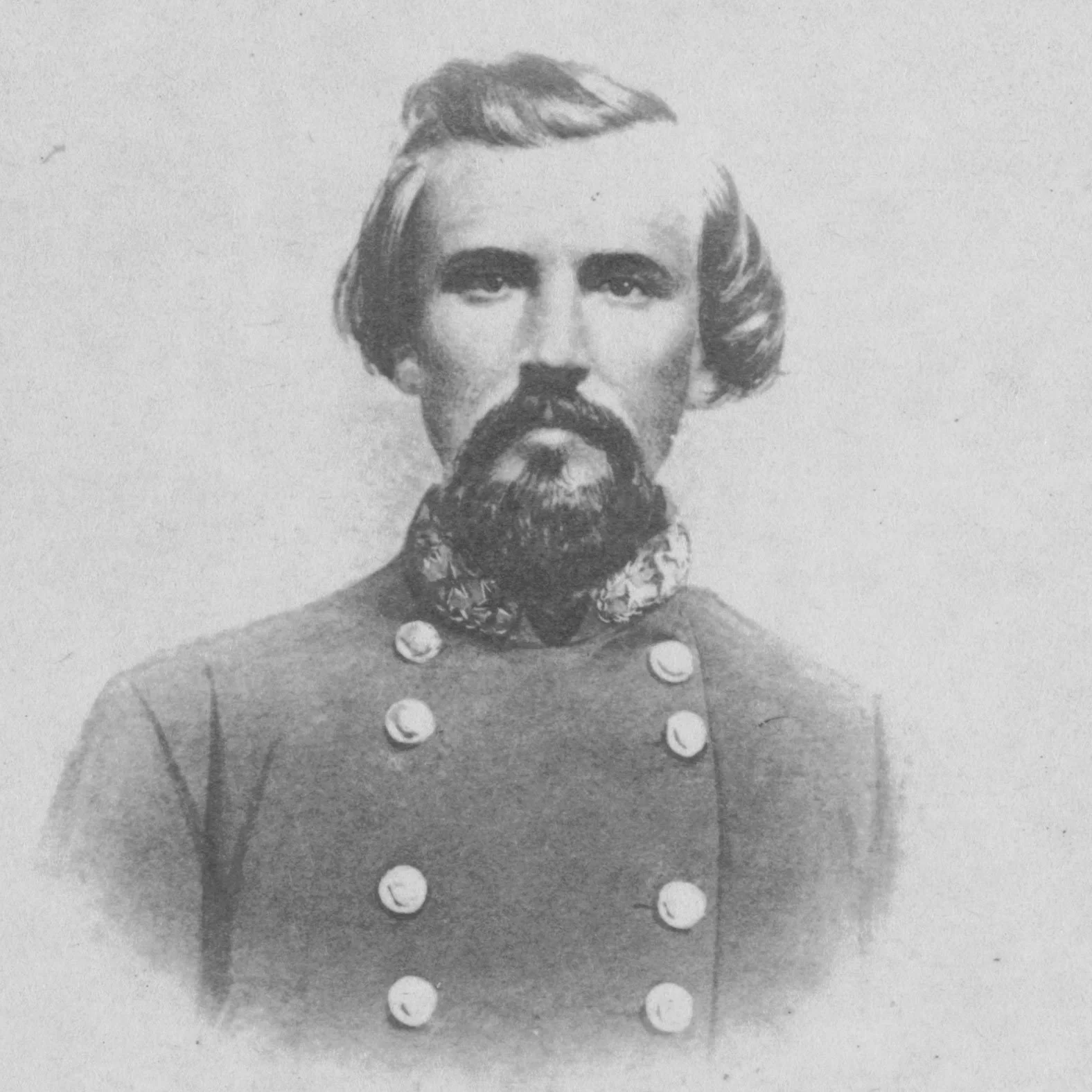
Confederate General Nathan Bedford Forrest. (Credit: Library of Congress)
In his new movie, “One Battle After Another,” director Paul Thomas Anderson slips in a passing reference to Confederate General Nathan Bedford Forrest.
The movie’s villain, Col. Steven J. Lockjaw (portrayed marvelously by Sean Penn), tracks down The French 75’s revolutionary cell leader Perfidia (Teyana Taylor) and gets her to give up the names of several comrades, who are then killed. Lockjaw is rewarded with The Bedford Forest Medal of Honor from a grateful nation.
So, class, let’s refresh our memories about NBF.
Forrest, was born July 13, 1821, in Chapel Hill, Tennessee. He was a interstate slave trader who enlisted as a private in the Confederate Army and was eventually promoted to the rank of general. He was one of the few soldiers to do so during the war without previous military training.
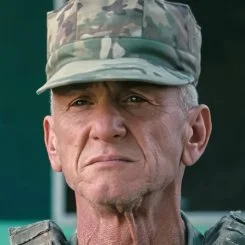
Sean Penn as Col. Steven J. Lockjaw.
Like George A. Custer, Forrest was considered an expert cavalry leader and was given command of a corps. Here, he established new doctrines for mobile forces, earning him the nickname "The Wizard of the Saddle." He used his cavalry troops as mounted infantry and often deployed artillery as the lead in battle, thus helping to "revolutionize cavalry tactics.”
Any accomplishments Forrest may have had during the war were negated in April 1864, when troops under his command at the Battle of Fort Pillow (April 12) in Tennessee massacred hundreds of surrendered Union Army troops, free blacks and Tennessee Southern Unionists. It’s been called, “perhaps the most infamous application of the Confederate no-quarter policy for black combatants.” Some historians questioned Forrest’s level of responsibility for the massacre.
Forrest joined the Ku Klux Klan in 1867, two years after the organization's founding, and was elected its first Grand Wizard. The group was a secretive network of dens across the post-war South where politically active black people and their allies were threatened, assaulted and murdered. The Klan, with Forrest at the helm, suppressed the voting rights of blacks through violence and intimidation during the elections of 1868. In 1869, Forrest expressed disillusionment with the group's lack of discipline, and issued a letter ordering the dissolution of the Ku Klux Klan as well as the destruction of its costumes; he then withdrew from the organization. Forrest later denied being a Klan member.
He died in 1877 of diabetes in Memphis at the age of 56.
This isn’t the first time NBF played a part in a major motion picture. In the 1994 release, “Forrest Gump,” the main character (played by Tom Hanks) learns from his mother he was named after the Confederate general as a reminder that "sometimes we all do things that just don't make no sense."