
DEC 8: Famous Cities of the West - pt. 2
DEADWOOD, S.D.
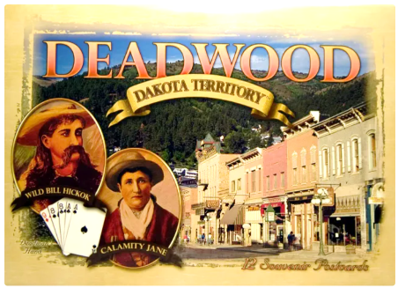
The town of Deadwood, South Dakota, was named by early settlers after the many dead trees they found in a gulch along Whitewood Creek. The discovery of gold in November 1875 led to a gold rush, and the settlement quickly grew into a town.
Deadwood attracted people from all walks of life during the Black Hills Gold Rush. Notable residents included:
Wild Bill Hickok, a legendary frontiersman and gunslinger who was killed in Deadwood’s Saloon No. 10 during a poker game on Aug. 2, 1876, while holding the famous "Dead Man's Hand,” a pair of black aces and a pair of black eights.
Calamity Jane, known for her rowdy life of adventure, was buried alongside Hickok in Mount Moriah Cemetery.
Seth Bullock, a businessman who became Deadwood's first sheriff and a prominent citizen, operating the Bullock Hotel.
Al Swearengen, a notorious saloon owner, often portrayed in media, who ran a popular theater and entertainment hall.
Potato Creek Johnny, a harmonica player and prospector, known for his musical talent and distinctive nickname.
OMAHA, NE
The name Omaha comes from the Native American Omaha tribe, whose name for themselves was "Umoⁿhoⁿ". This word translates to "those going against the current" or "those going against the wind," reflecting the tribe's historical settlement along the Missouri River. The city of Omaha, Nebraska, was named after the tribe when it was established in 1854.
The history of Omaha began in the early 1840s when speculators from neighboring Council Bluffs, Iowa, crossed the Missouri River and began staking land there illegally. When it became legal to claim land in Indian Country, William D. Brown began operating the Lone Tree Ferry to bring settlers from Council Bluffs to Omaha.
A treaty with the Omaha Tribe allowed creation of the Nebraska Territory, and Omaha City was founded on July 4, 1854.
LARAMIE, WY
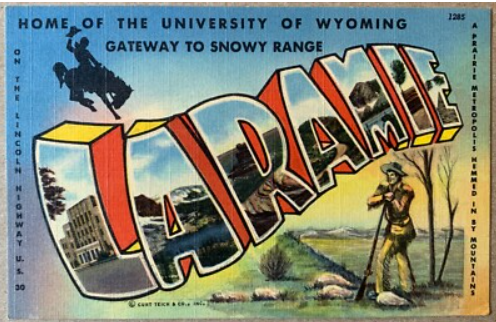
Laramie is named after Jacques La Ramee, a French or French-Canadian fur trapper who disappeared in the nearby mountains in the early 1820s. His disappearance led to the area being named in his honor, with a river, mountains, peak, U.S. Army fort, county, and eventually the city all being named for him.
The city itself was founded in 1860 as a tent city and stopping point for the Union Pacific Railroad.