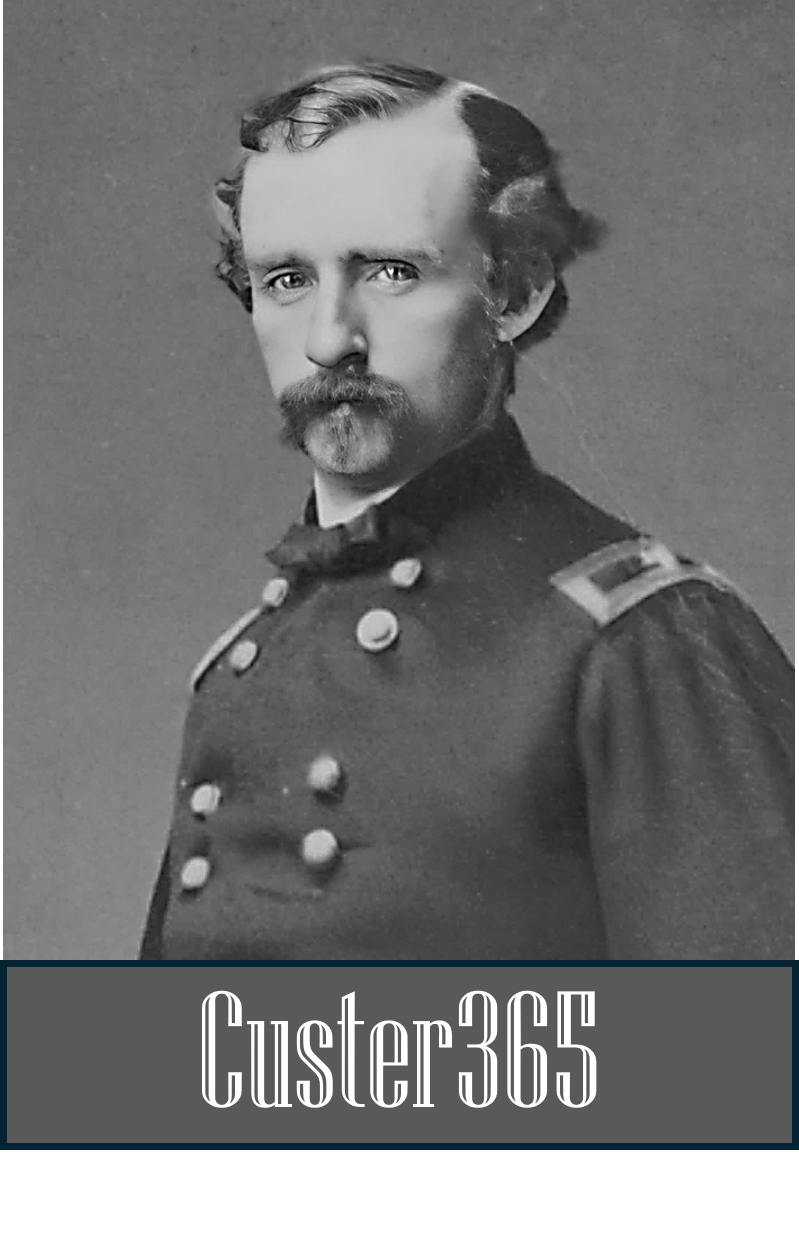

DEC 9: Chiggers in Texas
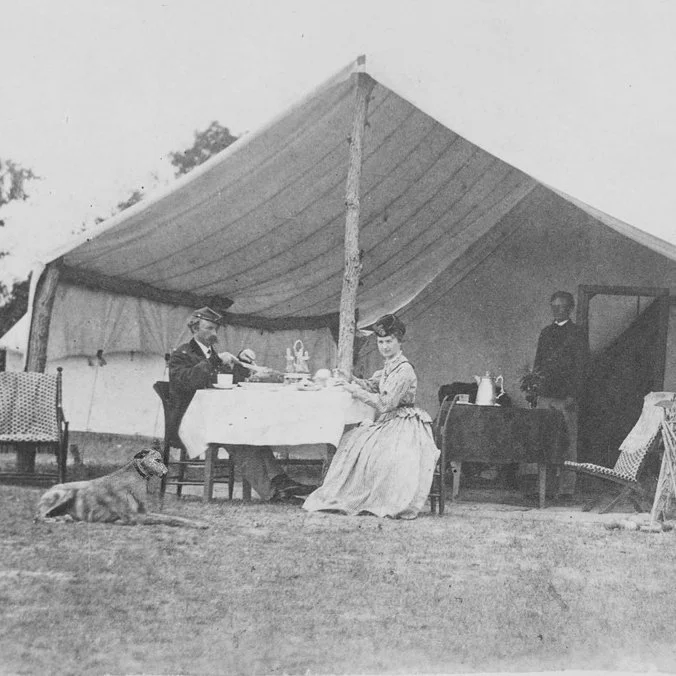
George and Libbie Custer tenting in the field near Fort Hays, Kansas. (Credit: Library of Congress)
Following the conclusion of the Civil War, George A. Custer and his wife, Libbie, spent time in the deep South. During the summer of 1865, they lived together in Alexandria, Louisiana. Usually, a military spouse would remain behind at home while her husband was at a post or in the field. That didn’t work for the Custers, but it placed a burden on Libbie that most wives could not endure.
“I did not marry you for you to live in one house, me in another,” Custer once wrote to his wife. “One bed shall accommodate us both.”
Conditions were challenging. Before marching on to Texas, where Custer would be the senior military office in the state from late summer 1865 to February 1866, the couple suffered through miserable heat and humidity in Louisiana. According to author Stephen Ambrose’s book, “Crazy Horse and Custer: The Parallel Lives of Two American Warriors,” the couple would lie down in the shade of some trees for a mid-day break from the beating sun. Naps were usually short lived, however, due to an abundance of poisonous snakes that would come out from the nearby woods.
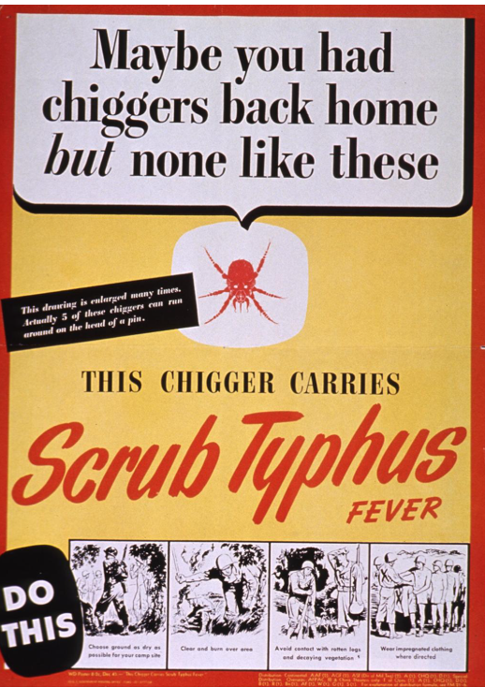
Chiggers remained a threat to Army personnel into World War II, as this 1945 U.S. War Department poster shows. (Credit: Government Printing Office)
Another formidable pest in that region was the chigger, a tiny, parasitic larva of a mite known for causing intensely itch red bumps. Libbie wrote to a friend:
“The chiggers bury their heads under the skin and when they’re swollen with blood it’s almost impossible to extract them without leaving the head embedded. This festers and the irritation is almost unbearable. If they see fit to locate on neck, face or arms, it is possible to outwit them in their progress. But, they generally choose that unattainable spot between the shoulders and the surgical operation of taking them out with a needle or knifepoint must evolve upon someone else.”
Libbie, Ambrose wrote, “wouldn’t dream of halting the column” of soldiers and wagons she accompanied so that she could remove a chigger. “Instead,” Ambrose said, “she endured the torment throughout the rides and had Custer remove them at night.”